
Insulation Before & After in San Jose, CA
Anyone can claim their insulation work transforms a home. We’d rather show you. The photos below are the kind of jobs we handle across San Jose every week, from Willow Glen ranchers with 90-degree upstairs bedrooms to Evergreen two-story homes where the AC never shuts off. Some attics look fine at a glance. The problems are in the details: gaps, settling, old fiberglass compressed to half its original thickness. Here’s what fixing them actually looks like.
Recent Transformations
Attic Insulation Replacement in Willow Glen
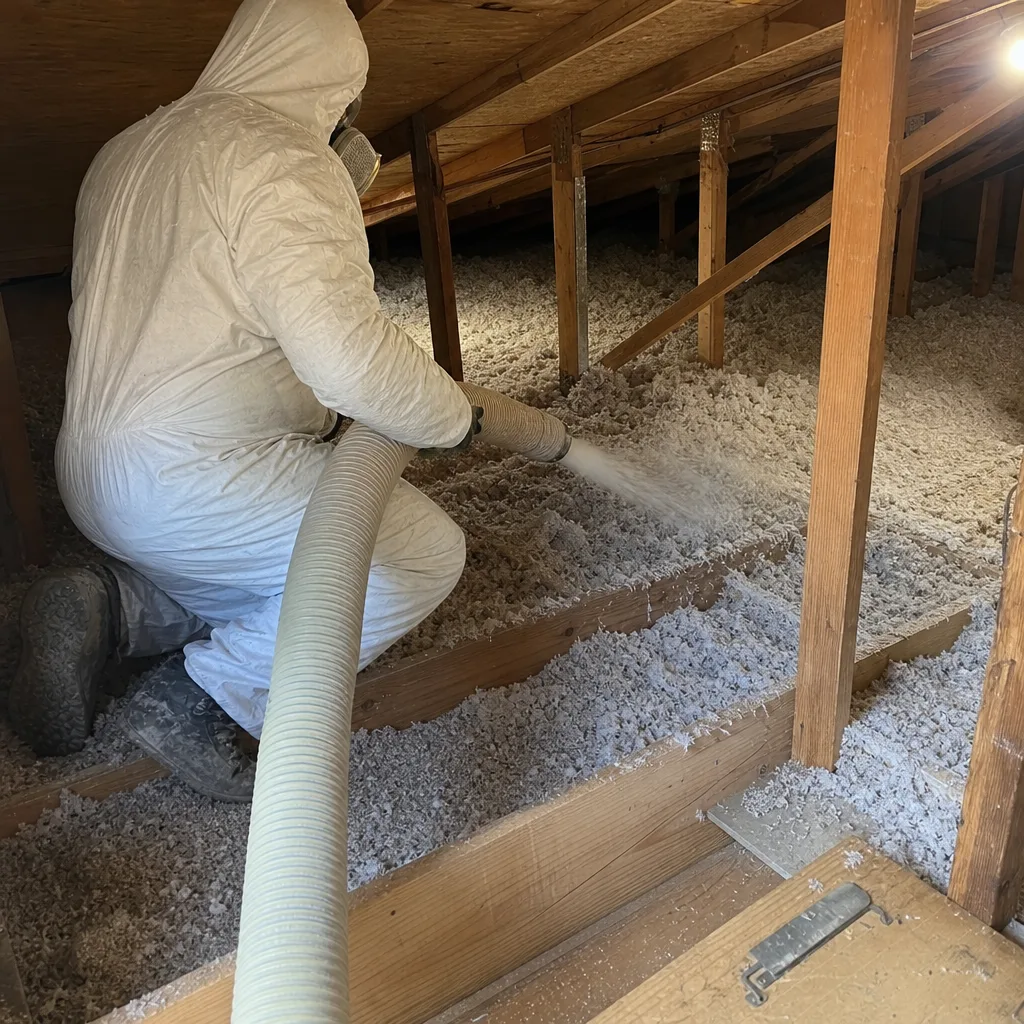
The problem: a 1970s ranch with original fiberglass batts that had settled to roughly R-11 in places, plus a visible gap where the attic floor met the exterior wall. The homeowner was running the AC from May through October and still couldn’t get the back bedrooms under 80 degrees. We removed the old material, air-sealed every plumbing and electrical penetration we could reach, and blew in fresh Owens Corning fiberglass to R-38 across the entire attic floor. The upstairs temperature difference was noticeable within two days, and the AC finally started cycling normally instead of running constantly.
Spray Foam Insulation for a Vaulted Ceiling in Almaden Valley
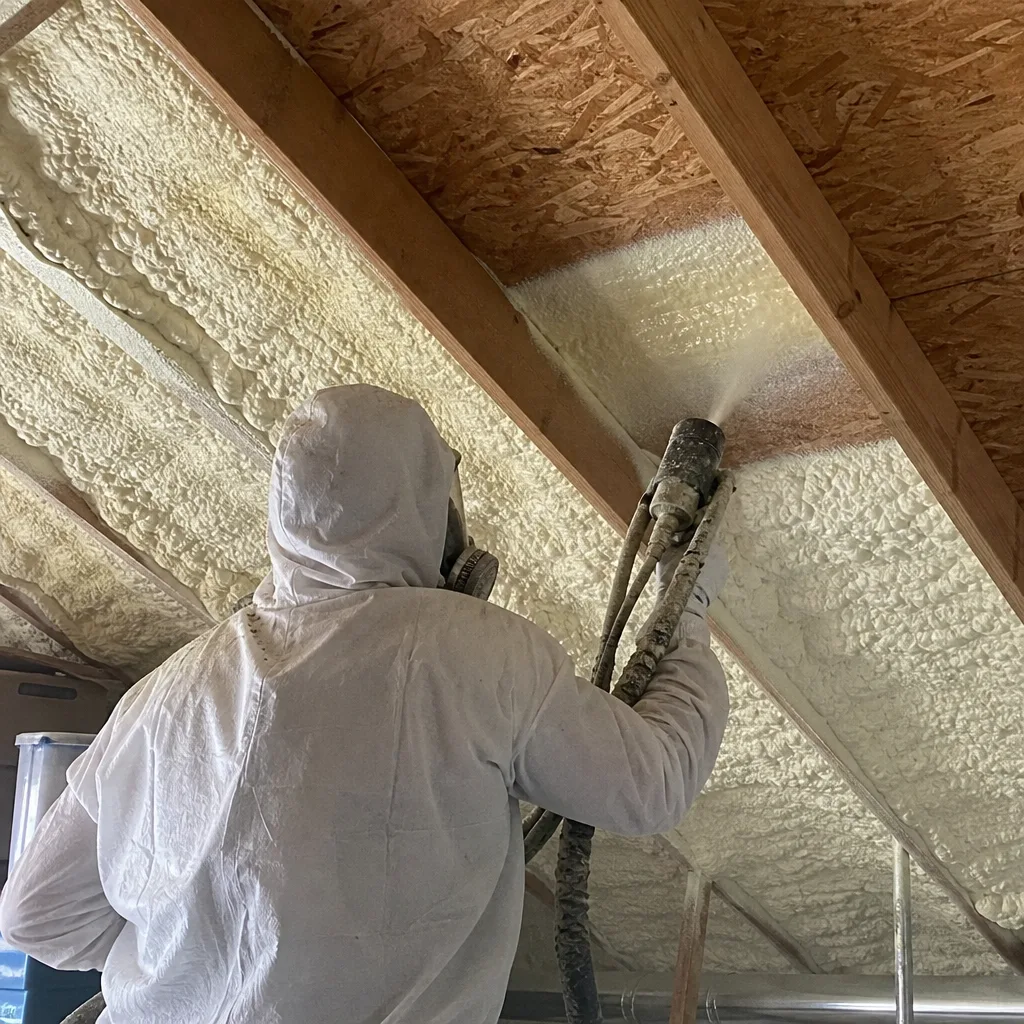
Vaulted ceilings in San Jose create a specific headache: there’s no attic cavity, so heat radiates straight through the roof deck into the living space. This Almaden Valley home had a family room that felt like a greenhouse by 2 p.m. every summer day. We applied Icynene open-cell spray foam directly to the underside of the roof deck, creating an air barrier and insulation layer in the same pass. The room now stays within a few degrees of the rest of the house, and the homeowners noticed the difference before the foam was even fully trimmed.
Blown-In Insulation Top-Up for a Berryessa Split-Level
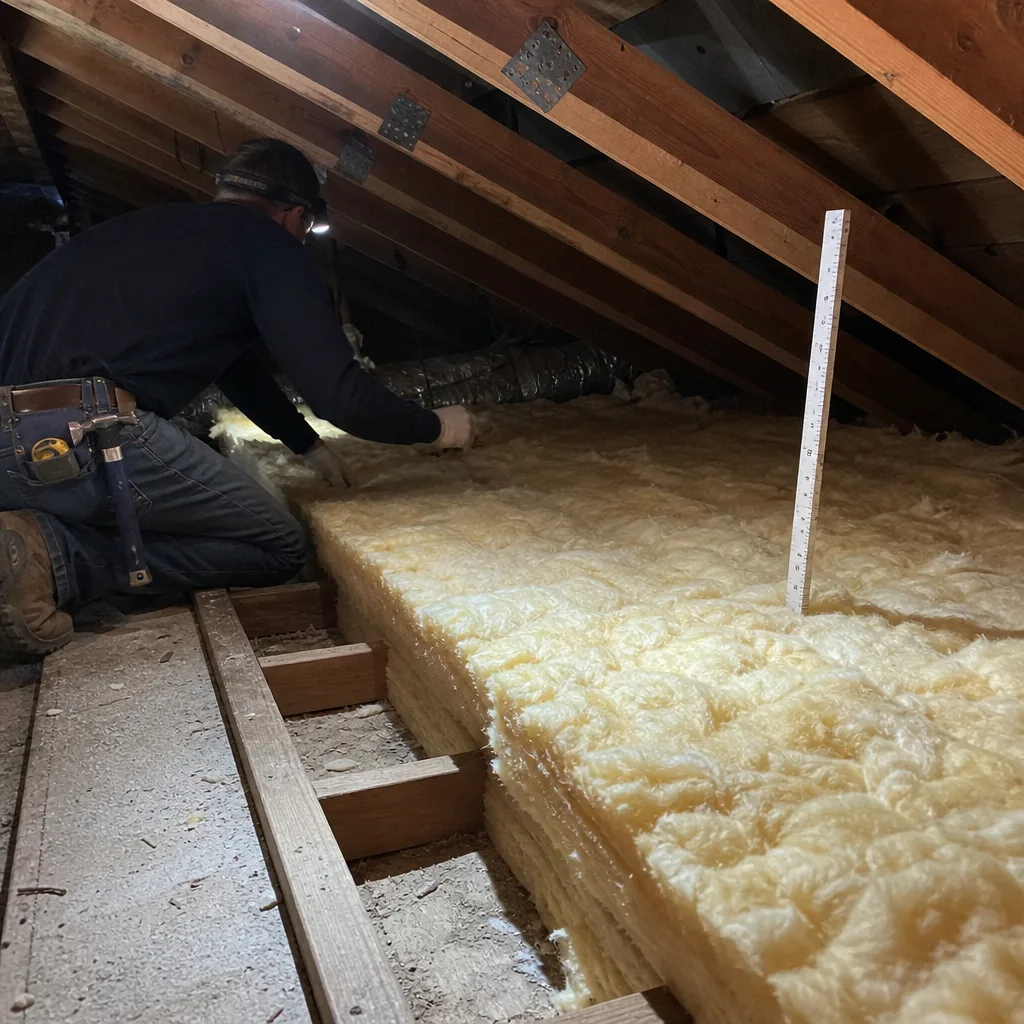
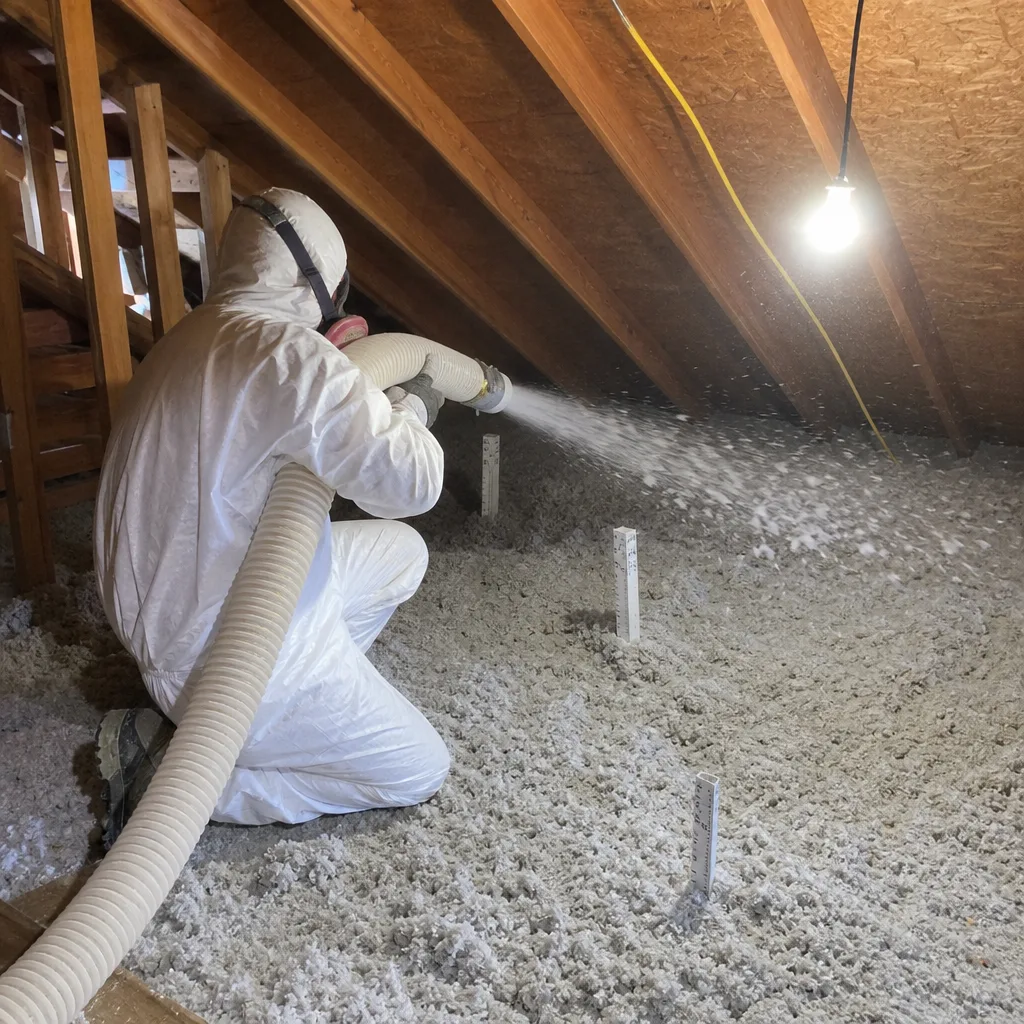
Not every job requires ripping everything out. This Berryessa split-level had blown-in insulation that was present but wildly uneven, ranging from 4 inches in the corners to maybe 9 inches in the center. The hot spots upstairs matched the thin spots in the attic exactly. We ran a depth check, showed the homeowner the measurements, and topped the entire attic with GreenFiber cellulose to a consistent R-38. Blown-in insulation (loose fibers blown into the attic cavity to fill every gap) is ideal for this kind of top-up because it levels itself into every low spot, including the awkward corners around truss chords that batts never reach.
Spray Foam Rim Joist Sealing in Cambrian
The problem in this Cambrian home wasn’t the attic at all. Cold air was pouring into the living room floor from a vented crawl space through a rim joist that had never been sealed. You could feel the draft standing in the kitchen in January. We applied Demilec closed-cell spray foam to every rim joist bay, sealing the air leaks and adding R-7 per inch in the same step. The floor stopped feeling like a refrigerator door, and the heating bill dropped noticeably that first winter. Homeowners often overlook rim joists because they’re out of sight, but in San Jose’s older crawl space homes, they’re one of the biggest thermal holes in the building envelope.
Attic Insulation Removal After Rodent Damage in Rose Garden
This one wasn’t about staying warm. A Rose Garden homeowner discovered rodents had been living in the attic, and the insulation was soaked through with urine and littered with droppings. The smell had started seeping into the hallway below. We removed every contaminated batt, sanitized the decking, verified the entry points were sealed by the homeowner’s pest contractor, and blew in fresh Johns Manville insulation to R-38. The odor was gone within 48 hours, and the home’s energy performance was actually better than before the damage, because the original insulation had been installed poorly back in the 1980s.
Blown-In Insulation for a New Addition in Japantown
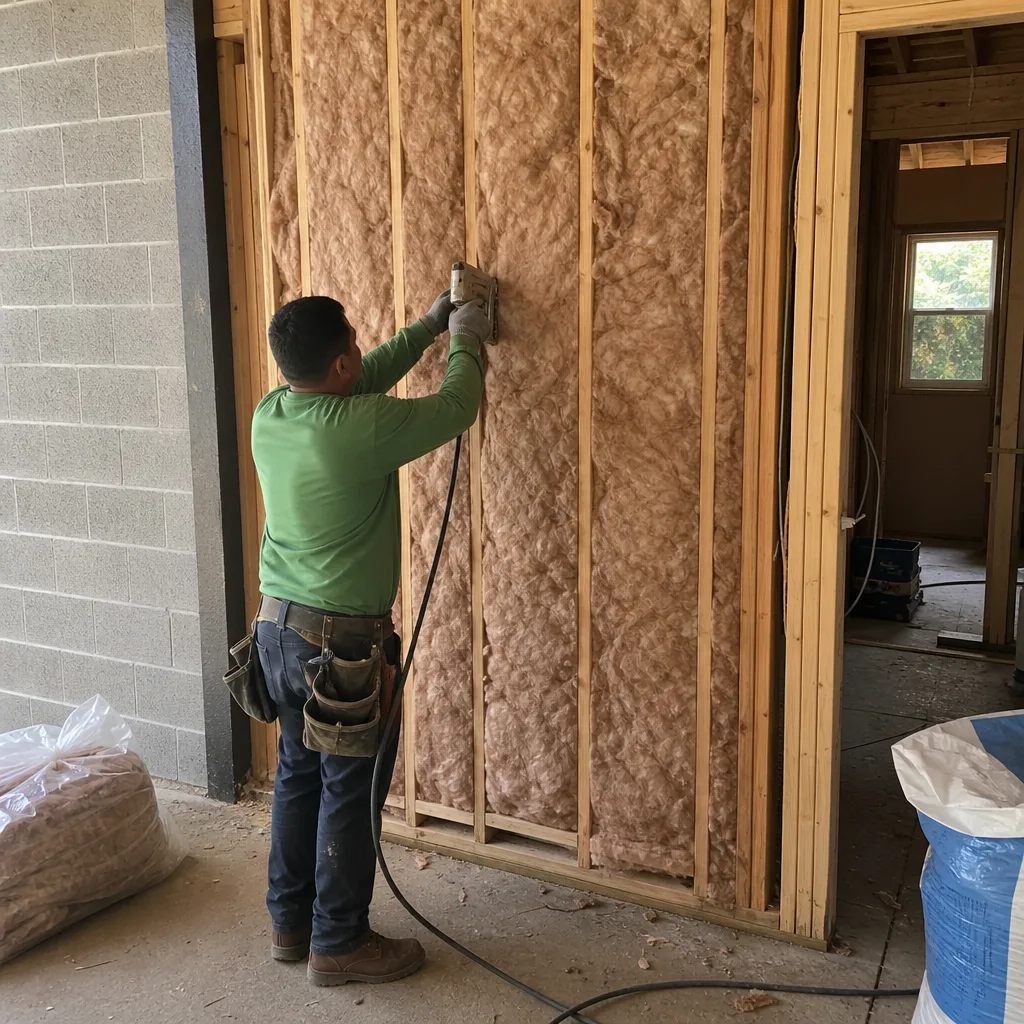
Sometimes we arrive before the drywall goes up. This Japantown homeowner had just finished framing a second-story addition and the contractor left the insulation to them. We blew Knauf fiberglass into the attic cavity and the wall cavities before the sheetrock crew arrived, hitting R-38 overhead and R-21 in the walls. Doing it at this stage costs less than retrofitting later and avoids the gaps that come from trying to fish batts around electrical boxes and plumbing stacks. The homeowner’s contractor later told them it was the cleanest insulation job he’d seen on an addition in years.
Want Results Like These?
Every project above started with a phone call and a free inspection. We’ll check your current insulation depth, look for air leaks and hot spots, and give you a written price before any work starts, no surprises after the fact. Call us at (669) 220-7044 to schedule your attic assessment in San Jose. Garrett Sloane, owner of Aspen Attic Insulation San Jose, is the one who answers.
Written by Garrett Sloane, Owner at Aspen Attic Insulation San Jose, serving San Jose since 2002.