
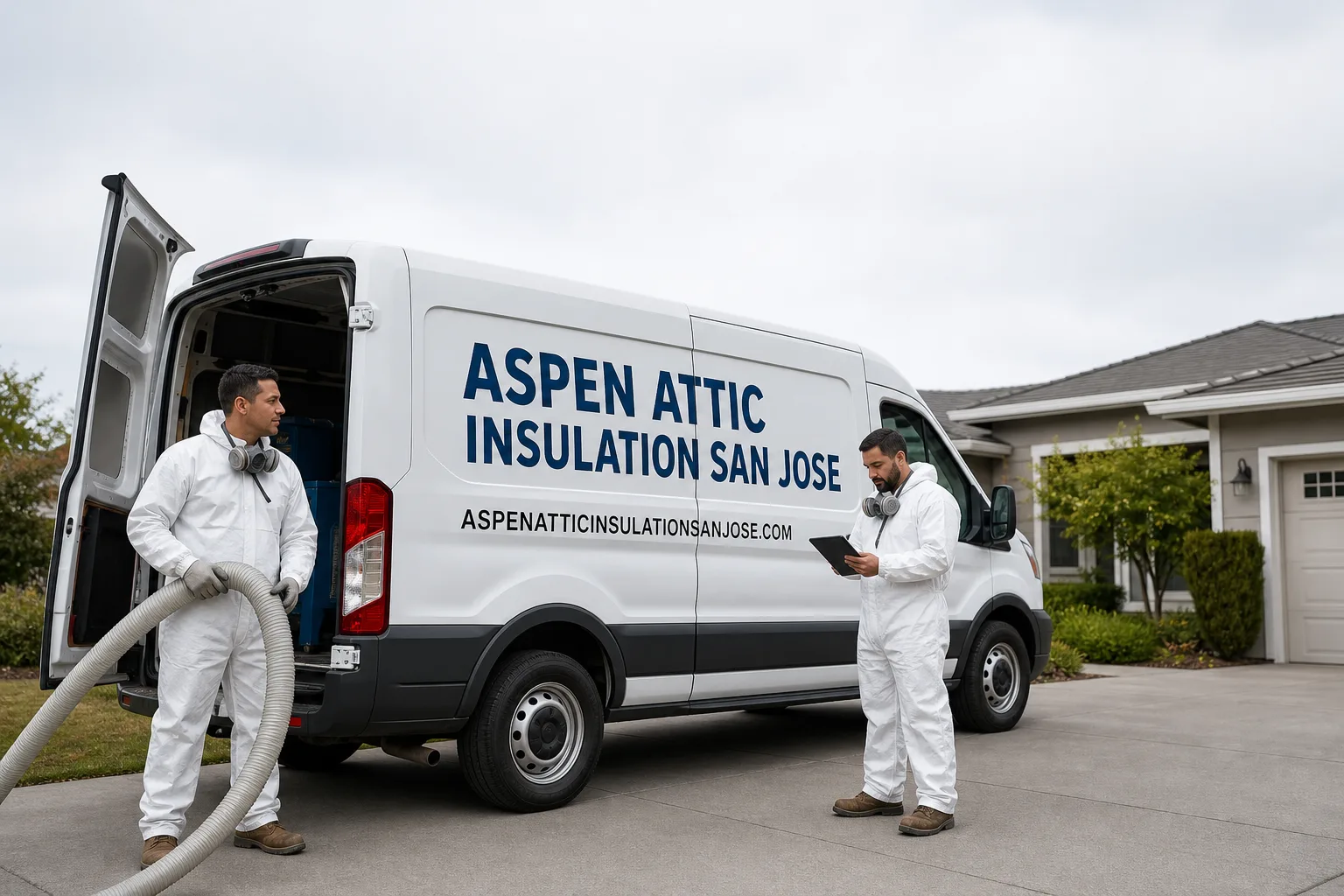
Fast, Reliable Attic Insulation Across Saratoga
Attic insulation in Saratoga usually means one of two jobs: bringing a 1960s to 1980s hillside home up to current energy standards, or fixing what a previous contractor got wrong. Most Saratoga attics we open have original fiberglass batts that have slumped to R-11 or worse, leaving vaulted ceilings and skylight wells bleeding heat all winter. We serve every Saratoga neighborhood, from the flats near Saratoga-Sunnyvale Road up to the ridge lines off Pierce Road, with same-week scheduling in most cases. Call (669) 220-7044 and a live person answers, day or night. You’ll get a written price before any work starts, and the name and photo of the tech who shows up at your door.
Why Aspen Attic Insulation San Jose Is Saratoga’s Preferred Attic Insulation Company
Saratoga homeowners tend to ask sharper questions than most. They’ve got custom homes with real redwood paneling they don’t want touched, and they’ve heard horror stories about insulation crews blowing debris through the house or leaving gaps behind the drywall. Our local reputation in Saratoga is built on not being that crew. Every technician we send to a Saratoga job is background-checked, identity-verified, and arrives in a clean marked uniform with a photo ID badge. Before the visit, you get the tech’s name and photo. If someone else shows up, the visit is free and we make it right. That’s the Threshold Standard, and it’s non-negotiable.
We’ve crawled through attics in the Vineyard district, off Quito Road, and up along Highway 9 where the lots get steep and the access hatches get tight. We know which Saratoga homes have cathedral ceilings with almost no attic cavity, and which ones have truss attics that can take a full R-38 top-up. That local knowledge means the estimate we give you reflects what’s actually above your ceiling, not a generic square-foot price from a call center.
Our work in Saratoga carries the Attic Insulation team’s 365-Day Done Right Promise: every repair and installation is covered in writing for a full year, labor and materials included. If something isn’t done right, we come back and fix it free. That’s what backs every job we do in Saratoga.
Attic Insulation Removal in Saratoga
Attic Insulation Removal in Saratoga is a job we handle frequently, and it’s almost always the right first step when a home still has its original insulation from the 1970s or early 80s. Over decades, fiberglass batts settle, compress, and collect dust, rodent droppings, and moisture. In Saratoga’s hillside homes, the damage is often concentrated around recessed lights and skylight wells, where heat escaping all winter has baked the batts brittle. Removal here typically runs $1.50 to $2.75 per square foot, including bagging, HEPA vacuuming, and haul-away. If there’s rodent activity or moisture damage, expect the higher end. We always inspect the attic framing and wiring after removal and flag anything that needs attention before new insulation goes in.
When Full Removal Makes Sense
If your Saratoga attic insulation is original to a house built before 1990, it’s probably underperforming badly and may be hiding moisture problems. We recommend full removal when old batts are compacted, damp, or riddled with rodent tunnels, or when you’re planning a lighting retrofit and want a clean cavity to work in. Leaving old, compromised material under new insulation just traps the problem. In Saratoga, where many homes have original wood siding, trapped moisture behind insulation is how you get rot and mold you won’t see until it’s expensive.
What Removal Costs in Saratoga
A typical 1,200 to 1,800 square foot attic in a Saratoga single-story rancher or hillside split-level will cost between $1,800 and $4,400 for complete removal and disposal. Cathedral-ceiling sections with limited access add labor, since our crew has to work through smaller openings and protect interior finishes. We’ll give you a written line-item price before any work starts, so you know exactly what removal costs before you commit.
Insulation Contractors in Saratoga
Insulation Contractors in Saratoga are not all the same, and the difference shows up fast on custom homes. A crew that mostly does production tract houses will struggle with a 1978 hillside build that has vaulted ceilings, limited attic access, and homeowners who don’t want patch marks on their redwood paneling. We handle the technique-heavy work: dense-pack cellulose blown behind existing drywall, spray foam applied from the interior or exterior, and careful baffle installation around the eaves so soffit vents keep breathing. Labor for insulation contracting work in Saratoga typically runs $75 to $120 per hour per tech, and material costs are passed through at our supplier pricing with a written breakdown.
Dense-Pack and Spray Foam Expertise
Saratoga’s cathedral-ceiling homes usually can’t be insulated through the attic because there isn’t one. That’s where dense-pack cellulose and spray foam come in. Dense-pack fills the rafter bays completely through small access holes, and spray foam can be applied from the exterior under the eaves or from inside through the ceiling. Both methods preserve your interior finishes and your view windows, which is the whole point in Saratoga.
Retrofit Work That Respects the House
We treat every Saratoga retrofit as a preservation job first and an insulation job second. That means drop cloths on the floors, sealed work areas, and careful cutting around existing trim and lighting. When we finished a hillside home off Prospect Road, the homeowners’ first comment was that they couldn’t tell where we’d been, except that the upstairs bedroom finally held its temperature. That’s the standard we aim for on every Saratoga job.
Trusted Brands We Service in Saratoga
We stock and install materials from brands that hold up in Saratoga’s specific conditions: Owens Corning fiberglass batts, GreenFiber dense-pack cellulose, and Demilec closed-cell spray foam for cathedral ceilings and rim joists. Having the right material on hand means we don’t push a one-size-fits-all solution. For a 1960s Saratoga rancher with a standard truss attic, blown-in fiberglass or cellulose is usually the smartest money. For a custom hillside build with no attic access, dense-pack or spray foam is the only thing that actually works. We tell you which one your house needs and why, with the brand name on the written estimate.
Common Attic Insulation Problems We See in Saratoga Homes
- Settled and gapped fiberglass batts in vaulted ceilings. Original 1960s through 1980s batts settle to R-11 or worse over time, and gaps open around recessed lights and skylights. In Saratoga’s hillside homes, those gaps become thermal bypasses that pull heated air right out of the living space all winter.
- Moisture buildup from improper cathedral-ceiling insulation. When contractors use the wrong material in a low-access roof cavity, condensation forms behind wood siding and inside the rafter bays. We’ve opened Saratoga attics where mold was already established behind the drywall because fiberglass batts were shoved into a space that needed dense-pack or closed-cell foam.
- Solar heat gain overwhelming undersized insulation. Saratoga custom homes often have floor-to-ceiling windows facing the valley. In summer, that glazing drives heat into the ceiling cavity, and if the attic insulation is thin, the HVAC runs constantly. Proper attic insulation can’t stop solar gain, but it can keep that heat from migrating into the rooms you’re paying to cool.
- Insufficient attic ventilation trapping heat and moisture. Many Saratoga homes from the mid-century era have soffit vents that were never properly baffled or have been blocked by blown-in insulation over the years. We install baffles and check the full ventilation path so the attic can breathe, which extends the life of both the insulation and the roof deck.
Pricing for Attic Insulation in Saratoga, CA
Attic insulation costs in Saratoga run higher than in denser, newer neighborhoods to the east, and the reason is simple: the houses are older, larger, and more complicated. Here’s what you can expect for common jobs:
- Blown-in attic top-up (R-30 to R-38): $2,200 to $4,800 for a typical 1,500 to 2,500 square foot attic
- Full attic insulation replacement (removal plus new R-38): $4,500 to $9,500 depending on attic size and access
- Dense-pack cellulose for cathedral ceilings: $3.50 to $6.00 per square foot of ceiling area
- Closed-cell spray foam (roofline or rim joist): $4.50 to $8.00 per square foot
- Attic baffle installation and ventilation prep: $450 to $1,200 for most Saratoga attics
Every estimate is free, and you’ll have the written number in hand before any work starts. Call (669) 220-7044 and we’ll schedule a look at your attic, tell you what it actually needs, and price it line by line.
We Also Serve Cities Near Saratoga
Our crews regularly work in Campbell, Santa Clara, Boulder Creek, and San Jose, so if you’ve got a second property or a family member nearby, we can help there too. The same written pricing, the same 365-Day Done Right Promise, and the same named-tech protocol apply everywhere we go. If you’re in one of those cities, give us a call and we’ll point you to the right page or schedule a visit.
Serving Saratoga, CA - Our Local Coverage Area
We’re based in the Saratoga area and know this community well. Use the map below to see our service coverage - if you’re nearby, we can almost certainly help.
FAQs About Attic Insulation in Saratoga
We use dense-pack cellulose or closed-cell spray foam, applied either from the interior through the ceiling or from the exterior under the eaves, depending on your home’s construction and what finishes need to be preserved. For most Saratoga hillside homes from the 1960s to 1980s, dense-pack cellulose blown behind the existing drywall is the least invasive option that actually works. It fills the entire rafter bay without sagging, and it doesn’t require removing your redwood paneling or disrupting the living space. Call (669) 220-7044 and we’ll tell you which access method fits your roofline.
Yes, and it’s often the single most effective change you can make. Saratoga’s older hillside homes have large glass areas and under-insulated ceiling cavities, so heat pours out in winter and pours in during summer. Proper attic insulation slows that transfer, which evens out room temperatures and reduces the load on HVAC systems that are often original to the house. We’ve measured meaningful reductions in heating costs after retrofits, including a 22% drop on a 1970s home off Prospect Road after dense-packing the vaulted ceilings.
That depends on what’s up there now. If the existing insulation is original to a 1960s to 1980s Saratoga home, has settled to half its rated R-value, or shows signs of moisture or rodents, removal is the right call. Adding new insulation on top of compromised material traps problems and can hide active mold or wiring issues. We’ll inspect your attic and give you a straight answer, including a written price for removal if it’s needed, before anything gets scheduled.
For standard attics above wood-framed homes with stucco or wood siding, blown-in fiberglass or cellulose at R-38 is usually the best value and performs well. For cathedral ceilings or low-access roof cavities, dense-pack cellulose or closed-cell spray foam from Demilec is the only reliable option, because it fills the entire cavity and doesn’t leave gaps that lead to moisture problems behind the siding. We match the material to your home’s specific construction rather than pushing whatever’s on the truck.
We focus on the ceiling and attic cavity because that’s where insulation has the most impact on solar heat gain. Large windows heat the room, and that heat rises into the ceiling. If the attic insulation is thin or gapped, that heat bakes the upstairs rooms all summer. A proper air seal plus R-38 or dense-pack insulation keeps the heat in the living space where your HVAC can manage it, instead of letting it soak into the attic and radiate back down after sunset. Call (669) 220-7044 for a free inspection and a written recommendation.
Written by Garrett Sloane, Owner at Aspen Attic Insulation San Jose, serving Saratoga and the surrounding Bay Area communities since 2002.