
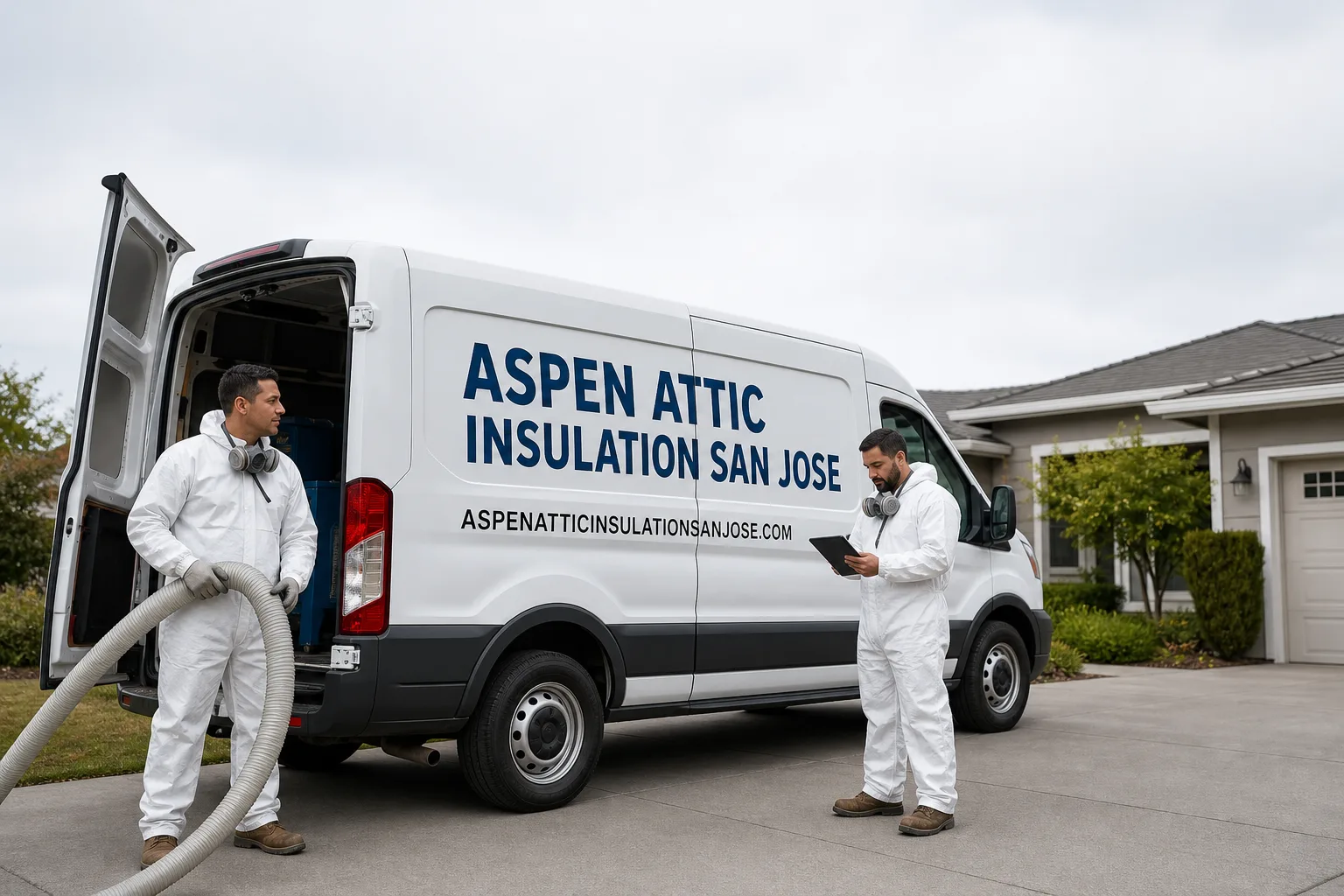
How Much Does Crawl Space Encapsulation & Vapor Barrier Cost in San Jose?
Crawl space encapsulation in San Jose typically costs between $5,500 and $16,000 for a standard 1,000 to 1,800 square foot crawl space, with most homeowners in neighborhoods like Willow Glen, Cambrian, and Almaden Valley paying around $8,500 to $11,000 for a complete crawl space encapsulation vapor barrier services system including sealed vents and a dehumidifier. A vapor barrier alone, without full encapsulation, runs $2,200 to $5,800 depending on the barrier thickness and the condition of your crawl space floor. These numbers are for 2026 and reflect the labor and material rates we see across Santa Clara County.
Your actual price will move up or down based on access, standing water, existing insulation, and whether you need a drainage system or sump pump installed. Most jobs in San Jose are completed in one to three working days.
If you want an exact number for your home, call (669) 220-7044 for a free written estimate. No one shows up at your door that you haven’t already seen by name and photo.
Key Takeaways:
- Full crawl space encapsulation in San Jose runs $5,500 to $16,000; most homes land between $8,500 and $11,000.
- A standalone vapor barrier costs $2,200 to $5,800.
- Per square foot, expect $4.50 to $9.00 for encapsulation depending on crawl space condition.
- A dehumidifier adds $1,200 to $2,800 installed, and it’s worth every dollar in San Jose’s clay-heavy, winter-damp soil.
- Sealing vents plus vapor barrier is the minimum effective system for most San Jose homes built before 1990.
Crawl Space Encapsulation & Vapor Barrier Cost Breakdown (2026)
Here’s what the line items actually look like on a San Jose encapsulation job. These are real numbers we use when we price work, not national averages you’ll find on a generic cost website. San Jose’s labor market, permit requirements, and soil moisture conditions all shape these figures.
| Service / Component | Typical Cost Range (San Jose, 2026) | What’s Included |
|---|---|---|
| Vapor barrier (6-mil) only | $2,200 – $3,800 | Ground cover, basic seam taping, no vent sealing |
| Vapor barrier (12-mil reinforced) | $3,400 – $5,800 | Heavier barrier, better seam sealing, partial wall coverage |
| Full encapsulation (1,000-1,500 sq ft) | $7,000 – $12,500 | 12-mil barrier, sealed vents, foundation wall coverage, sealed crawl door |
| Full encapsulation (1,500-2,500 sq ft) | $10,500 – $16,000 | Same as above plus larger floor area and additional pier wrapping |
| Dehumidifier (crawl space rated) | $1,200 – $2,800 | Unit installed, drainage line, electrical hookup if circuit available |
| Sump pump installation | $1,800 – $3,500 | Pump, basin, discharge line to exterior |
| Drainage system (interior French drain) | $2,500 – $5,500 | Perimeter drain in crawl space, gravel, tie-in to sump |
| Insulation replacement (floor joists) | $1,500 – $4,000 | Removing water-damaged fiberglass and installing new material |
| Mold / mildew treatment | $800 – $2,500 | Surface cleaning and antimicrobial application before encapsulation |
| Termite / pest inspection (if required) | $150 – $350 | Third-party inspection, often required by lenders before closing |
What moves these numbers up or down in San Jose specifically?
- Crawl space height. If your crawl space is under 30 inches tall, crews work slower, which means more labor hours. Homes in older San Jose neighborhoods like Rose Garden and Naglee Park often have shallow crawl spaces that push labor costs up 15 to 25 percent.
- Standing water. If there’s water pooled under the house, you need drainage and a sump pump before any barrier goes down. That adds $4,300 to $9,000, but skipping it means the vapor barrier gets pushed up by water pressure within a year.
- Existing insulation condition. Water-damaged fiberglass insulation hanging from the floor joists has to come out first. If it’s friable and falling apart, removal and disposal adds $1,500 to $3,500 before a new barrier is installed.
- Access points. If the only entry is a small hatch in a closet, materials go in and out slower. A full-size crawl door or exterior access keeps labor hours down.
- Clay soil and the local water table. San Jose sits on heavy clay. During the rainy season, from November to March, the soil swells and holds water against foundation walls. Homes in low-lying pockets near the Guadalupe River or Coyote Creek see more hydrostatic pressure than homes on the foothills in Evergreen or Silver Creek.
What Affects Crawl Space Encapsulation & Vapor Barrier Pricing in San Jose
Every house prices differently, but the reasons are consistent. Here’s what we look at when we walk a San Jose crawl space and build a written estimate.
- Crawl space square footage. More floor area means more barrier material, more seam tape, more pier wrapping, and more labor. A 1,000 square foot crawl space in Berryessa prices lower than a 2,200 square foot crawl space under a larger Almaden Valley ranch.
- Vent sealing requirements. Older San Jose homes, especially those built between 1950 and 1985, typically have six to twelve foundation vents. Each one gets sealed with rigid foam board or a vent cover rated for the application. Vent count directly affects both material cost and labor time.
- Pier and beam complexity. Crawl spaces with many support piers, odd angles, or layered foundation systems take longer to encapsulate. The barrier has to be cut and sealed around each pier, and every seam is a potential moisture path if it’s not done properly.
- Current moisture levels. We measure relative humidity during the estimate. If your crawl space is running 70 percent humidity or higher, you need a dehumidifier, because sealing a wet space without one turns the crawl into a slow-motion mold chamber. San Jose’s coastal fog and winter rains keep many crawl spaces in the 65 to 75 percent range year-round.
- Building placement and drainage. If your lot slopes toward the foundation or your downspouts empty next to the house, sub-surface water becomes a permanent problem. Fixing gutter drainage and grading may add $500 to $2,000 but keeps your encapsulated space dry for years instead of months.
- Permit requirements. San Jose requires permits for certain crawl space work, especially when electrical components like a dedicated dehumidifier circuit or sump pump are involved. Permit fees typically run $200 to $700, and we handle the paperwork as part of the job.
For context on how we approach the work itself, see our Crawl Space Encapsulation & Vapor Barrier in San Jose page. It walks through the process from inspection to final seal, so you know precisely what a done-right job looks like.
How to Save on Crawl Space Encapsulation & Vapor Barrier
Saving money doesn’t mean cutting corners. It means doing the right work in the right order and not paying for things your home doesn’t need. Here’s how San Jose homeowners keep encapsulation costs down without sacrificing the result.
- Fix drainage before encapsulation. Downspout extensions, French drains, or simple grading fixes cost a few hundred to a couple thousand dollars. Doing them before you encapsulate means the barrier goes in over a drier floor, which lets it perform better and last longer. A dry crawl space chews through less dehumidifier energy, too.
- Replace damaged insulation at the same time. If the floor joist insulation is water-damaged, it comes out during encapsulation anyway. Bundling the replacement with the encapsulation means one mobilization, one visit, less total labor. You’ll also get one written price instead of two separate estimates.
- Get a dehumidifier sized correctly. Oversized units cost more up front and draw more electricity every month. A right-sized unit for a typical San Jose crawl space runs $1,200 to $2,200 installed and handles the job. We calculate the cubic footage and moisture load rather than defaulting to the biggest unit on the shelf.
- Don’t skip the 12-mil barrier. The 6-mil plastic meets minimum code, but it tears under a crew’s weight during installation and punctures when you store tools under the house. The 12-mil reinforced barrier costs $1,200 to $2,000 more and lasts decades. Replacing a torn 6-mil barrier after two years costs more than doing it right the first time.
- Use the estimate to compare line items, not just totals. Ask each company what’s included: vent sealing, pier wrapping, a sealed crawl door, a dehumidifier, a drainage line. A lower bid that omits vent sealing isn’t a lower bid; it’s a partial encapsulation that won’t control humidity. We give every San Jose homeowner a written, line-item price before any work begins, so there’s nothing hidden to find later.
If you want to know exactly what your home needs and what it will cost, call (669) 220-7044. The estimate is free, it’s in writing, and it comes with a specific recommendation, not a menu of upsells.
What You’re Actually Paying For: Materials and Labor in the Real World
It’s useful to know what’s in the price beyond labor. A full encapsulation system includes specific materials, and the quality of those materials dictates how long the system performs.
The vapor barrier itself is a polyethylene sheet, either 6-mil, 10-mil, or 12-mil reinforced. In San Jose, we almost always recommend the 12-mil reinforced product for full encapsulation because it resists punctures from gravel, tools, and normal crawl space use. The barrier runs across the floor, up the foundation walls, and gets sealed at every seam with a butyl tape or mastic designed for polyethylene. Every pier gets wrapped and sealed, and the crawl space door gets weather-stripped and insulated.
Vent sealing uses rigid foam board cut to each vent opening, sealed with foam or caulk rated for moisture contact. A dehumidifier sized for the cubic footage of the crawl space gets installed with a gravity drainage line or condensate pump. If your home needs a sump pump, that’s a separate basin and pump system that discharges outside, away from the foundation.
All of this is labor-intensive work done in a confined space. A three-person crew working in a 36-inch-high crawl space can cover 200 to 400 square feet of barrier per day depending on the pier layout and whether they’re also removing old Crawl Space Insulation. The labor rate for crawl space work in San Jose runs $75 to $120 per hour per worker, and a full encapsulation typically takes 30 to 80 crew-hours.
Encapsulation vs. Vapor Barrier Only: Which Does Your San Jose Home Need?
This is the most common decision point, and it has a direct pricing consequence. The cheapest fix is a ground cover Crawl Space Vapor Barrier, but it’s not the same as encapsulation.
A vapor barrier alone lays 6-mil or 12-mil plastic over the dirt floor. It blocks ground moisture from rising into the crawl space, but it doesn’t address the vents (which still let outside humid air in), the foundation walls (which still absorb soil moisture), or the crawl space air itself. In San Jose, where winter rain saturates clay soil for months at a time, a ground cover alone typically drops crawl space humidity from 80 percent down to about 60 to 65 percent. That’s better, but still high enough to support mold on floor joists in the long run.
Full encapsulation seals every path: floor, walls, vents, and door. It keeps the crawl space at whatever humidity level your dehumidifier holds, usually 45 to 50 percent. That’s the number where wood stays stable and mold can’t grow. For a San Jose home with hardwood floors above the crawl space, full encapsulation is the difference between floors that stay flat and floors that cup with the seasons.
Here’s the cost comparison in plain terms:
- Vapor barrier only, 6-mil: $2,200 to $3,800. Moderate moisture reduction, no vent sealing.
- Vapor barrier, 12-mil with wall coverage: $3,400 to $5,800. Better durability, partial moisture control.
- Full encapsulation: $7,000 to $16,000 depending on size and accessories. Complete moisture control, dehumidifier, sealed vents, conditioned space.
If you plan to store anything in the crawl space, or you’re dealing with recurring mold, musty odors, or floor cupping, encapsulation is the only option that solves the problem. If you’re listing a home for sale and the inspector flagged a missing ground cover, the barrier alone might satisfy the report, but the next buyer’s inspector will likely flag the vents anyway.
San Jose Climate and Soil: Why Encapsulation Costs What It Costs Here
San Jose gets about 15 inches of rain a year, which sounds modest until you account for how it arrives. Between November and March, the city receives most of that rain in concentrated storms. The ground saturates, and because San Jose sits on expansive clay soil in much of the valley floor, that water doesn’t drain quickly. It sits against foundation walls for weeks.
In neighborhoods built on the valley’s heavier clay soils, including much of East San Jose, Alum Rock, and the area around Story Road, crawl spaces stay damp well into May. In the foothill neighborhoods, like the areas up against the Santa Cruz Mountains in Los Gatos’s western edges and the hills above Almaden, drainage is faster, but the winter moisture still finds its way under homes.
This is why the dehumidifier is standard on our San Jose encapsulation quotes. Sealing a damp crawl space without active moisture removal leads to condensation on the barrier surface and, eventually, the smell of a wet basement rising through the floor. The dehumidifier isn’t an upsell; it’s the component that makes the seal work.
The clay also matters for drainage decisions. If your downspouts discharge at the foundation corner, the water follows the path of least resistance, which is downward along the foundation wall and under the house. Sump pumps and French drains are more common on San Jose encapsulation jobs than they are in, say, higher-desert markets where the soil drains in hours. That’s a real cost difference between markets, and it’s why national cost averages don’t map cleanly onto San Jose pricing.
What to Do Before You Get a Quote
A little preparation before an estimate makes the whole process faster and the written price more accurate. Here’s what helps us give you a number you can trust.
- Check your vents. Count the foundation vents around the outside of the house. Most San Jose homes built before the mid-1980s have at least six, but some have ten or more. Knowing the count gives us a head start on the estimate.
- Look for water stains inside the crawl space. If you’re comfortable doing a quick visual check from the access point, note any wet spots, standing water, or white mineral deposits on the foundation walls. Those tell us whether drainage work belongs in the scope.
- Test the humidity. A $15 digital hygrometer from any hardware store gives you a baseline reading. Leave it in the crawl space for 24 hours. If it reads above 65 percent, expect a dehumidifier in the proposal.
- Move stored items if you can. Many San Jose homeowners store boxes, furniture, and seasonal decorations under the house. Clearing the floor before the estimate and the work saves time and protects your belongings from the construction process.
- Ask for a written, line-item price. Not a verbal number. A written estimate with every component listed. That’s standard practice for us at Aspen Attic Insulation San Jose, and it should be standard practice for any company you call.
FAQs – Crawl Space Encapsulation & Vapor Barrier Cost
How much does crawl space encapsulation cost per square foot in San Jose?
In San Jose, expect to pay $4.50 to $9.00 per square foot for full encapsulation, with most homes landing between $6.00 and $7.50 per square foot. A 1,200 square foot crawl space typically runs $7,200 to $9,000. A 2,000 square foot crawl space usually falls between $12,000 and $15,000. Smaller crawl spaces carry a higher per-square-foot cost because fixed expenses like the dehumidifier and sealed door spread across less square footage. Call (669) 220-7044 for a written estimate on your specific square footage.
Is it cheaper to encapsulate or to keep running a dehumidifier without encapsulation?
Over five years, encapsulation is typically cheaper. A crawl space dehumidifier running without a sealed space costs $25 to $60 per month in electricity in San Jose, and it’s fighting a losing battle against vented outside air. That’s $1,500 to $3,600 in electricity over five years, plus climbing humidity and potential mold remediation. A full encapsulation with a right-sized dehumidifier costs $7,000 to $16,000 once, and the dehumidifier uses less energy because the sealed space holds its moisture level. If you’re planning to stay in the home more than five years, encapsulation usually wins the math. For an exact comparison for your home, call (669) 220-7044.
How much does a vapor barrier cost for a crawl space in San Jose?
A basic 6-mil vapor barrier costs $2,200 to $3,800 for a typical San Jose crawl space. A 12-mil reinforced barrier with proper seam sealing and partial wall coverage runs $3,400 to $5,800. The 12-mil is the better value for anyone staying in the home because it resists tears during installation and normal use. We can price both options for your home, in writing, before you decide. Estimates are free.
Can you fix standing water in my crawl space, and what does that cost?
Yes. Standing water requires drainage work before any encapsulation, costing $2,500 to $5,500 for a perimeter French drain and $1,800 to $3,500 for a sump pump, depending on access and the length of the affected wall. Homes in low-lying San Jose neighborhoods near the Guadalupe River and Coyote Creek see this more often than homes in the foothills. We build drainage into the same written estimate as the encapsulation so there’s one price and one crew. Call (669) 220-7044 to schedule an inspection.
Will encapsulation increase the value of my San Jose home?
Yes, generally, though the exact dollar figure depends on the buyer and the sale conditions. A sealed, dry crawl space resolves the most common red-flag inspection item in San Jose real estate transactions. It typically recovers 40 to 70 percent of its cost at resale while also lowering your energy bills by $15 to $45 per month while you live there. The bigger return is in avoided repairs: cupped hardwood floors, mold remediation, and rotted joists cost far more than encapsulation, and those are the problems a wet crawl space eventually guarantees. A buyer who sees a sealed, conditioned crawl space with a documented installation has one less reason to negotiate.
Who Shows Up at Your Door: The Aspen Attic Insulation Difference
We understand that inviting a contractor into your crawl space requires trust. That’s why we do something most companies don’t: before any visit, you get the technician’s name and photo. When the tech arrives, they’re in a clean, marked uniform and they show a photo ID badge at the door. If anyone else shows up claiming to be from our company, the visit is free and we make it right.
That’s the Threshold Standard, and it’s not marketing language. It’s a protocol we follow on every job in San Jose, including crawl space encapsulation. Every technician is background-checked and identity-verified before they ever step onto a property.
The work itself is covered by the 365-Day Done Right Promise: if it’s not done right, we make it right, backed in writing, covering labor and materials for a full year. If a repair fails within that year, the second visit is free.
Garrett Sloane leads our San Jose team. The company has been operating since 2002 as part of the Threshold Group family. Each location is independently owned and operated, so the people who price your job are the same people accountable for doing it correctly.
Get a Written Price for Your San Jose Crawl Space
You shouldn’t have to guess what encapsulation will cost, and you shouldn’t have to let a stranger into your home without knowing who they are first. We give you a written, line-item price before any work starts. No post-job surprises. No vague verbal estimates that change when the invoice arrives.
We answer the phone 24 hours a day. Call (669) 220-7044 and you’ll talk to a live person, not a voicemail tree. Tell us about your crawl space, and we’ll schedule a free estimate at a time that works for you. Before the appointment, you’ll get the name and photo of the technician who’s coming.
If you want to learn more about how we approach this work, start at our home page or read the service detail on our Crawl Space Encapsulation & Vapor Barrier in San Jose page. Both explain the process in plain language.
Written by Garrett Sloane, Owner at Aspen Attic Insulation San Jose, serving San Jose since 2002.
Pricing reflects the San Jose market as of 2026. Aspen Attic Insulation San Jose offers free estimates – call (669) 220-7044.
What Our Customers Say
"Removed the old matted insulation and sealed the air leaks around the can lights before putting in new. Utility bill dropped the very next month."
- Larry O."Honest assessment. Told me the walls were fine and the attic was the problem. Saved me money."
- Ed M."The estimate was clear on R-value and cost per square foot. No add-ons."
- Omar N.